Table of contents
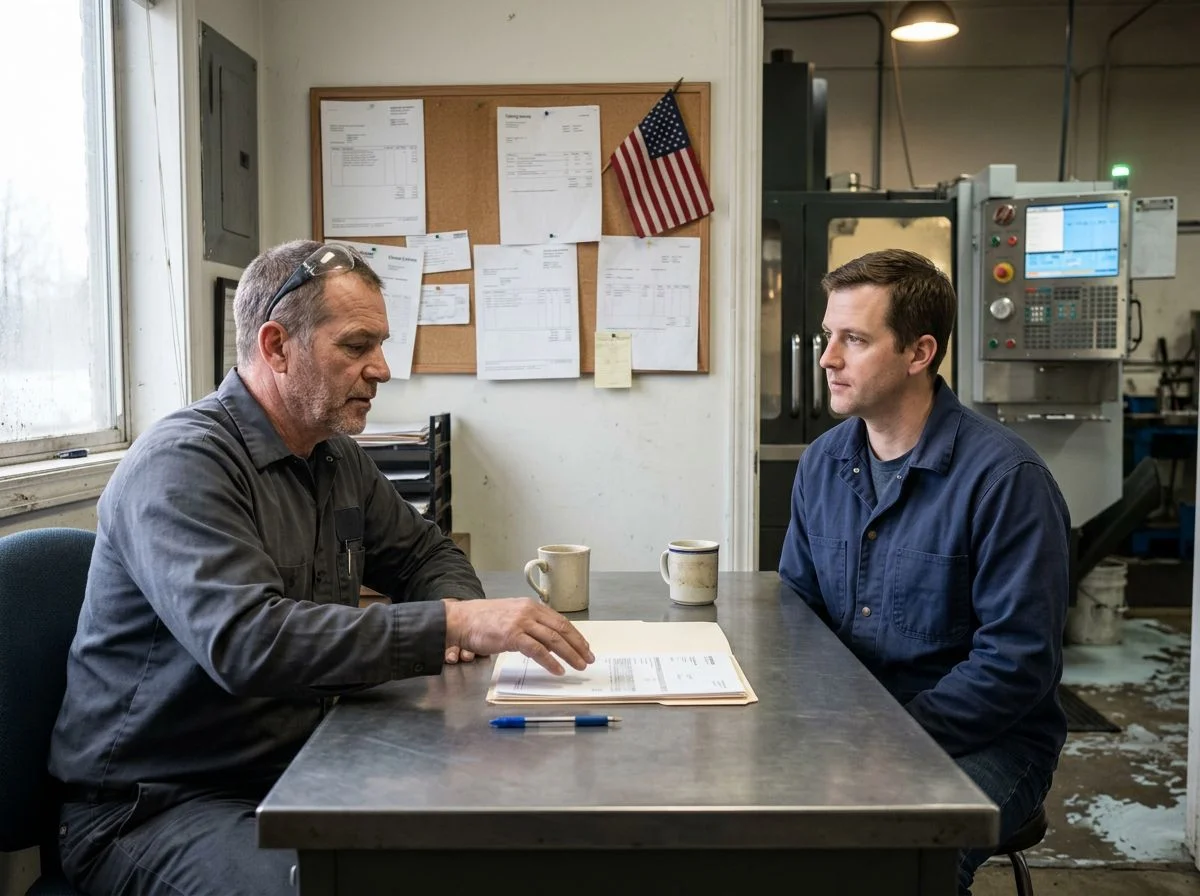
For a lot of manufacturing owners, the financial questions around a sale are only half the concern. The other half is personal: exploring a sale without your team hearing about it secondhand, without competitors using the rumor against you, and without customers getting nervous about continuity before there’s even a deal to announce. A traditional sell-side process, run through an investment bank or broker, usually means creating a confidential information memorandum and sending it to a list of prospective buyers, sometimes dozens of them. Even with signed non-disclosure agreements, that’s a wider circle of people who know your company is for sale, and in a tight-knit manufacturing community, that kind of information travels.
Steps to keep an industrial manufacturing business sale confidential

Limit who inside the company knows, and when. Most owners keep the circle to themselves and, at most, one or two trusted senior leaders until a deal is far enough along that broader disclosure is necessary. Waiting until after signing, or close to it, to inform the broader team is standard practice, not a red flag.
Prefer direct, off-market conversations over a broad marketing process. Every additional party who sees your financials and knows you’re exploring a sale is another point of potential leakage. A direct conversation with a single serious buyer, rather than a process designed to create competitive tension among many, is inherently more contained.
This isn’t unique to manufacturing. Writing for the trade publication FleetOwner, M&A banker John Sloan described the same dynamic in commercial fleet operations: once word gets out that a company is for sale, owners risk losing customers to competitors “happy to cast doubt” about the business’s future, an employee exodus driven by job-security fears, and deals falling through over rumors alone, whether or not they’re true. The industry changes; the mechanics of a leak don’t.
Choose a buyer who won’t push for a wider process. The broker runs the sale process, and the seller chooses the buyer from whoever that process surfaces, but some buyers, particularly those used to running formal auction processes, will still push for broader outreach because it can improve their own negotiating position or fee structure (in the case of brokers and bankers). A buyer who’s comfortable with a quiet, direct process gives you better control of communication to employees, customers, the local community, and the broader market, instead of leaving that timing to a process designed to create competitive tension.
Why We Prefer to Buy Manufacturing Businesses This Way

We specifically seek off-market opportunities through direct conversations rather than broker-run sale processes, in part because we’re not interested in participating in bidding wars, and in part because we understand that a confidential process protects the very thing we’re trying to buy: a stable, functioning business with a team that trusts its ownership. Read more about how our direct, confidential process works.
Still Have Questions?
We’re happy to answer any questions about our approach, acquisition criteria, or how we might be the right home for your business.
Get in Touch